

What is the Best Fabric for Drapery or Curtains?
Would you wear a slip for a dress made of denim? Probably not. Fabric choice matters, even in draperies.
The Best and Worst Fabrics for Curtains or Drapes
Careful consideration should go into picking a fabric for drapery, especially if the drapery is going to be operational and not stationary. The first consideration is of course the color or design of the fabric and how it will fit the design, but there is so much more than that. Let’s dive into a few options out there.
Cotton
Cotton! A 100% cotton fabric is my #1 choice for draperies. That doesn’t mean other fabrics can’t be made into drapery, but you will get the best results when you select a 100% cotton that is solid or is a high quality print that is printed on grain. What does printed on grain mean? It means the print is not crooked compared with the grain of the fabric. When I cut the fabric across the top following the weave of the base fabric, the print should be straight too. A fabric can be stretched a bit to get it to be straight and on grain, but if it is too far off, in the end it can affect how well the draperies function.
Linen and Linen Blends
Linen is very popular. It is a natural fiber that has a great texture. There can be some definite draw backs to it, though.
Linen reacts to humidity, especially a 100% linen. It can grow when it is humid and shrink up when it is drier. I have my own experience with this in my living room where I have linen sheers. In the summer, they puddle slightly. In the fall they are perfectly floor length, and in the winter they can be about a 1/4-1/2” off the ground. Some people have said that linen can grow up to 10%. While I haven’t seen that much variation, that would be 10 inches if you’re talking about a 100” drapery panel. I personally see more like a 1% variation, but it is still something to be aware of and keep expectations in check. Linen Blends are not as problematic and can help keep a linen stable.
If you want a linen, the best option is to use a linen-look fabric. You can still get the benefit of the texture of linen, but without the risk of growth/shrinkage.
Alpaca and Wool
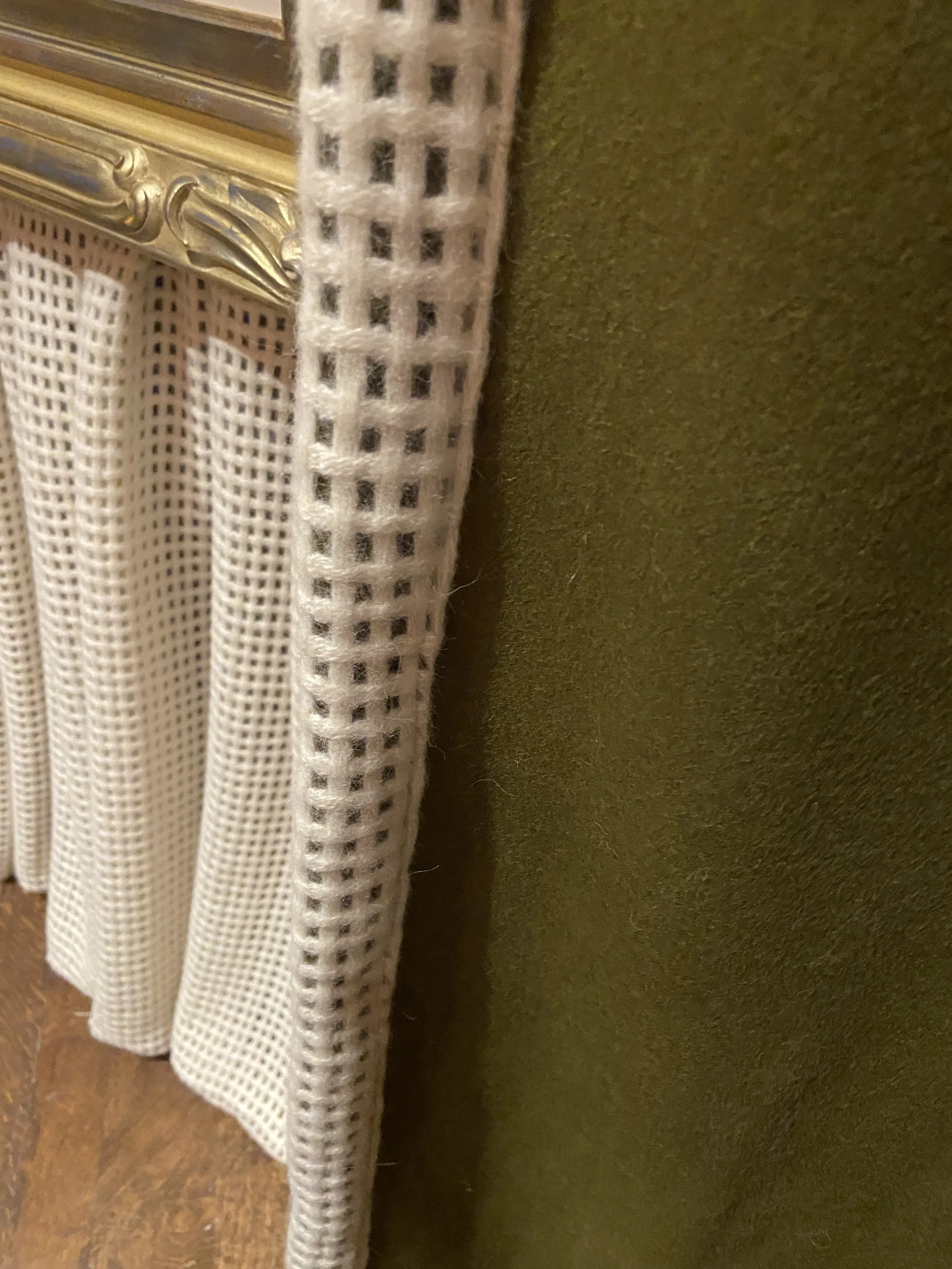
I recently went to the Kips Bay House in Dallas. It was the first time I’ve seen alpaca fiber in a drapery. It was absolutely beautiful and felt so luxurious. There were some things that I noticed, though. First, it grows significantly when it is installed. My installer refers to this as how it plays with gravity for the first time, since draperies are constructed on a horizontal surface. When gravity plays with alpaca for the first time, it stretched it more than the designer expected. It was still beautiful, but it puddled on the ground significantly. They were heavy. If you use Alpaca fiber, I will definitely suggest we hem on-site, which is additional time at installation and labor on the drapery. Another thing to keep in mind with alpaca is the pleat size. The pleats were incredibly fat. I would suggest a simple two finger pleat at the most, but I am curious how a cartridge pleat would end up looking. I may need to make a sample soon!
Wool also makes a beautiful drapery. It has excellent texture, softness, and color options and, if it is not thick, the option of which pleats to use may be more abundant.
Polyester and Poly Blends
Polyester is common as a faux silk alternative. It can work well, especially if interlined. Be aware, though, it can flare more than other fabrics.
Drapery Fabric Q&A
What fabric is the best for drapery?
By far, I love working with cotton. It is important for a print to be printed on grain, though, no matter the fabric content.
What should I be aware of when I use linen in drapery?
Prepare yourself for the possibility that the length will change with humidity. If you’re using it in a bathroom, I suggest we stabilize the linen to help keep it consistent in such a humid environment.
Of course there are so many more fabric types out there. It can be overwhelming. Don’t worry, though, I am here to help. If you’re present me with a few options you’re considering, I can look at them let you know which will be the best choice.
Until next time,